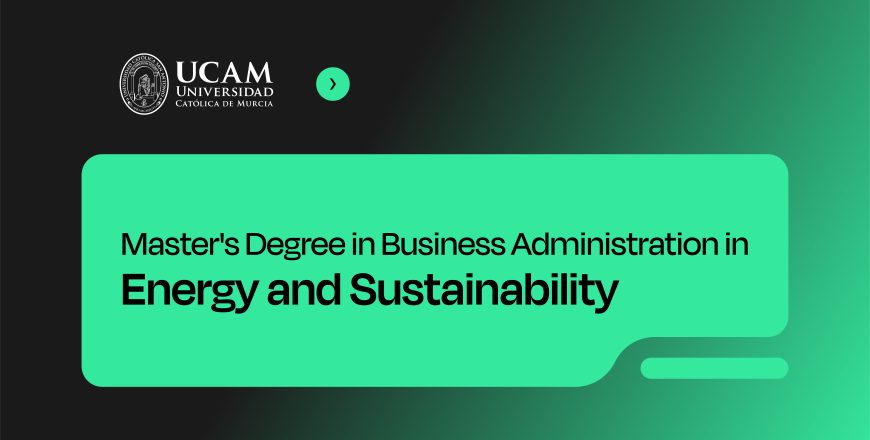
MBA in Energy and Sustainability - UCAM, Spain


- Description
- Curriculum
- Reviews
-
Course description:
The Master’s Degree in Business Administration in Energy and Sustainability is a career-focused program designed for professionals aspiring to leadership, management, and executive roles in today’s competitive business world. Graduates earn a Postgraduate Diploma in Business Administration from Cambridge International Qualifications (UK) and an MBA from Universidad Católica de Murcia (UCAM).
This program equips learners with practical management skills, strategic decision-making ability, problem-solving expertise, and a strong understanding of global business practices. It develops leadership confidence, communication excellence, and the capability to manage teams, improve performance, and drive organizational success across diverse industries.
-
Credits Table:
|
Module Code |
Module Name |
ECTS |
|
|
Part A 4 Core Modules and 2 Specialization Modules |
CIQGM703 |
Strategic Change Management |
5 ECTS |
|
CIQGM705 |
Strategic Management and Leadership |
5 ECTS |
|
|
CIQGM702 |
Operations Management |
8 ECTS |
|
|
CIQGM701 |
International Human Resource Management |
15 ECTS |
|
|
CIQGM723 |
Sustainable Energy Management |
3.5 ECTS |
|
|
CIQGM724 |
21st Century Globalisation |
3.5 ECTS |
|
|
Part B |
MBAUC700 |
Socio-Economic and Legal Environment |
5 ECTS |
|
Research Methods + Dissertation +VIVA |
15 ECTS |
||
|
Total ECTS |
60 ECTS |
||
-
Module Descriptions:
PART A
Strategic Change Management:
Change dynamics challenges managers due to the inherent uncertainty and need for adaptability. Strategic change impacts the human resources structure of the organisation, and this often means a restructuring of the workforce or changes in working practices. This course defines sequential process, role, and dynamics to organisational change, which imparts the skills and knowledge to support active engagement in the process of strategic change management and further highlights ways of dealing with it. It focuses on the need, phases, and conditions for successful organisational change. The knowledge developed as part of the module assists in real-world decision making. Different organisational interventions are also incorporated. The SCM module is designed to help students understand the dynamics of Strategic Change Management.
Learning Outcomes:
LO1. Identify and analyse the implications for managing strategic change in supporting organisational transformation.
LO2. Analyse the organisational management challenges faced during the transformation and changes experienced by the organisation.
LO3. Analyse and evaluate the significance of strategy employed in trying to bring about an effective change management in an organisation. How does this impact leadership and human behaviour in an organisation.
LO4. Evaluate different change management theories propounded on management and leadership attributes which leads to enhanced contribution by managers and the employees.
Strategic Management and Leadership:
This module is designed to help students understand and evaluate various aspects of Strategic Management in a global context. The module explores theories, models and frameworks to provide insight on how an organization’s life cycle evolves through various stages to achieve excellence. The module helps students to evaluate the relationship between organisational strategies, performance and stakeholder expectations.
Learning Outcomes:
LO1. Analyse the concepts and theories of strategic management and critically evaluate the relationship between strategy, stakeholder expectations and organisational performance.
LO2. Evaluate the impact of current and emerging Economic, Political and Cultural factors on strategic management in an international context.
LO3. Formulate business strategies under challenging circumstances of Innovation and Change and evaluate those that contribute to the success of a particular organization.
LO4. Develop plans for the implementation of business strategies and enhance Stakeholder Expectations.
Operations Management:
The module is designed to help students understand the strategic role of operations management and its competitive advantage for organisational survival. It brings out the relationships between the operations function and other functional areas of a business such as marketing, finance, and information systems and how they can work together to achieve the business strategy.
Learning Outcomes
LO1. Know the various tools, techniques and apply suitable tools and techniques in different alternative scenarios of Operations Management.
LO2. Apply information management techniques and evaluate them in context of operational functions to achieve competitive advantage and make the organisations globally competitive.
LO3. Apply and critically evaluate the importance of project management to given business situations (Using PERT / CPM).
LO4. Demonstrate operations strategy in domestic and global context and evaluate how the use of technology has impacted the operational functions
International Human Resource Management
The objective of this module is to make students understand the human resource management, and equip them with knowledge, skill and competencies to manage people along with material, information, capital and knowledge asset in the organization, to equip the students in formulating their own managerial and leadership, style, their assumptions and belief about ‘people’ and their behaviours in an organization. Given the state of competition and globalization, business environments are getting volatile and managing Human Resources is a challenge faced by present day organisations in both domestic and global scenarios. This module helps students relate HRM practices in globalized context, its significance, scope, and practices in relation to International Human Resource Management.
Learning Outcomes
LO1. Critically review and analyse the importance of HRM and its practices in an organisation, and how it can be linked with organisational behaviour activities in overcoming business issues and challenges for a better performance of the organisation.
LO2. Critically review and analyse the framework of leadership and consider the nature, strengths and weaknesses of the various approaches: traits; functional; behavioural; style; contingency. The continuum of leadership behaviour should be explored in some depth with consideration of the factors determining the chosen leadership style.
LO3. Discuss the concept of organisational behaviour and its interface with management. Review and critically synthesize the various influences on behaviour in organisations and the interface with management in integrating and balancing these.
LO4. Assess the role of IHRM and its impact on global organisation. Identify some of the key HRM challenges facing organisations working internationally. Discuss the prevalent HRM practices and integrating the best practices in global organisation.
Sustainable Energy Management
The module is designed to ensure the best use of resources and develop sustainable ways to produce and use energy. The module offers knowledge and expertise in relation to sustainable energy and environmental impact of energy systems. The module will also help learners gain a practical understanding of how established techniques of research and enquiry are used to create and interpret knowledge in the area of Sustainable energy and Environmental systems.
Learning Outcomes
LO1. Analyse and implement technical and business aspects of energy systems and value chains
LO2. Evaluate and assess models and scenarios of risk and uncertainty in Energy Management
LO3. Examine project implementation, development and management in Energy system transitions
LO4. Understand Sustainable Energy project business plans and related modelling tools and techniques.
21st Century Globalisation
The module focuses on various patterns and processes of globalisation along with the global challenges which are critical in the 21st century. The module provides learners with frameworks and scenarios on social science for understanding and analysing conceptualisations on globalisation. Various aspects of global trade and governance, migration and Information technology are deemed extremely critical as being the drivers for globalisation. In this regard, the module also considers the implications and challenges for globalisation in the future.
Learning Outcomes
LO1. Understand Globalisation and the drivers of Globalisation in the 21st century
LO2. Critically evaluate the role and impact of globalisation on the inequalities of the 21st century world
LO3. Examine and understand the aspect of expatriation and role of expatriate management in global scenario
LO4. Analyse the demographic, political and social processes that cause changes in the global world today.
PART B
Socio-Economic and Legal Environment
This module has been designed to provide the learners with the adequate understanding of the economic, social, political and legal context which affects the environments in which businesses and organisations operate. An analysis and understanding of critical factors such as globalisation, growth in the economy and legal regulations which affect the ability of businesses to operate is deemed highly important for management professionals.
Learning Outcomes
LO1. Critically analyse the knowledge economy and the various drivers of economic changes which impact business activities.
LO2. Understand the legal framework and its implications in the wider context of business Management.
LO3. Analyse case scenarios and case studies on the various economic drivers and legal frameworks practised in business management.
LO4. Critically evaluate the political factors which influence company management and dynamics.
Research Methods
The Management Project is supported through 8 structured Research Methods sessions designed to guide learners through their dissertation journey. This is an individual research effort where learners investigate a topic of their choice over an extended period, with ongoing guidance from an assigned supervisor. The sessions focus on building a clear understanding of the research process and expectations, while supporting learners in developing their literature review, exploring different research methodologies and philosophical approaches, and applying quantitative and qualitative analysis techniques. Learners are expected to attend all scheduled sessions, as these are essential for effectively planning, executing, and completing the dissertation.
Learning Outcomes
LO1. Identify and critically justify postgraduate research/enquiry techniques appropriate to the chosen business and management context.
LO2. Critically evaluate relevant ethical and operational issues relating to the chosen project.
LO3. Demonstrate the capability to undertake a systematic, analytical and evidence- based approach to a strategic management project.
Viva + Dissertation
-
1
 The Multi-Dimensional Definition of Change Management
 -
2
The Strategic Imperative – Why Change Management Defines Organizational Longevity
-
3
 Key Objectives of Change Management
 -
4
The Role of Leadership in Change Management
-
5
Leadership Tasks and Behaviors – The Mechanics of Transformation
-
6
Servant Leadership – The Inverted Pyramid of Transformation
-
7
 SCM Quiz 1.1
 -
8
Puzzle – Foundations of Change Management
-
9
Organizational Growth and Restructuring – The Dynamics of the Corporate Life Cycle
-
10
Leadership and Management Shifts – Navigating the Modern Corporate Landscape
-
11
The Human Factor—Aligning Performance and Culture
-
12
Market Competition and Globalization – The External Architect of Change
-
13
Technological Innovation and the Digital Transformation Mandate
-
14
SCM Quiz 1.2
-
15
Puzzle – Drivers of Organizational Change
-
16
The Spectrum of Change – From Evolutionary Fine-Tuning to Radical Metamorphosis
-
17
Intentionality and Emergence – Navigating Planned and Unfolding Change
-
18
Structural Change—Architecting the Global Enterprise
-
19
Cultural Transformation—Rewiring the Organizational DNA
-
20
Process Change—Optimizing the Organizational Engine
-
21
SCM Quiz 1.3
-
22
Puzzle – Types of Organizational Change
-
23
The Dynamics of Organizational Inertia: Mastering Change Management
-
24
The Inner Landscape: Navigating the Psychology and Emotion of Change
-
25
The Anatomy of Defiance: Behavioral Manifestations of Resistance
-
26
Strategic Interventions: Methodologies for Overcoming Organizational Resistance
-
27
Orchestrating Transformation: The Architecture of Change Agency
-
28
SCM Quiz 1.4
-
29
Puzzle – Managing Resistance to Change
-
30
Management vs. Leadership - Balancing Tactical Rigor and Strategic Vision
-
31
Architecting the Future - Preserving the Core while Pursuing Audacious Goals
-
32
The Transformation Blueprint - Leveraging Crisis and Holistic Capabilities
-
33
The ROI of Emotional Intelligence - Connecting Corporate Climate to Financial Performance
-
34
The Pillars of EI - Mastering Self-Regulation and Social Awareness for Global Influence
-
35
Empathetic Leadership Styles - Building Resilience and Overcoming Survivor Sickness
-
36
Strategic Foresight - Navigating the Volatility and Ambiguity of a VUCA World
-
37
The Adaptive Enterprise - Flipping Dilemmas and Fostering Radical Openness
-
38
The Strategic Glue - Orchestrating Change through Transparency and Narrative
-
39
SCM Quiz 2.1
-
40
Individual Psychology and the Architecture of Organizational Transformation
-
41
The Architecture of Adaptability: Openness to Experience as a Strategic Asset
-
42
Precision and Predictability: The Conscientiousness Conundrum
-
43
Social Cognitive Theory (SCT)
-
44
McKinsey Influence Model
-
45
SCM Quiz 2.2
-
46
Puzzle – Behavioral Strategic Planning
-
47
The Human Architecture of Organizational Change: Navigating Employee Resistance and Pushback
-
48
Kotter & Schlesinger Framework
-
49
Poor Communication & Misalignment
-
50
Communication Strategies
-
51
The Leadership Deficit: Why Transformation Requires More Than Management
-
52
SCM Quiz 2.3
-
53
Puzzle – Challenges in Change Management
-
54
The Kübler-Ross Change Curve (Emotional Adaptation)
-
55
The Strategic Continuum (Kotter & Schlesinger)
-
56
Transformational vs. Transactional Change (Burke-Litwin)
-
57
Cultural Assessment (The Competing Values Framework)
Cultural Assessment (The Competing Values Framework)
-
58
The Five Dimensions of Change Model
-
59
Adaptive Leadership – The Fluidity of Emotional Intelligence in Change
-
60
Case Studies of Successful Change Implementations
-
61
SCM Quiz 2.4
-
62
Puzzle – Strategic Change Integration: Models
-
63
Kurt Lewin’s 3-Step Model
-
64
The Physics of Progress - Force Field Analysis
-
65
John P. Kotter’s 8-Step Model
-
66
Management vs. Leadership
-
67
McKinsey’s 7S Framework
-
68
Application in Change
-
69
Beckhard’s Transition Model
-
70
Criteria of Evaluation - Hard vs. Soft Metrics
-
71
Short-Term vs. Long-Term Evaluation
-
72
OCAI (Organizational Culture Assessment Instrument)
-
73
SCM Quiz 3.1
-
74
Puzzle – Frameworks for Navigating Change
-
75
Navigating Organizational Complexity: From Scale to Systems
-
76
The Architecture of Strategy: Hierarchical, Flat, and Networked Systems
-
77
Incremental vs. Transformational Change
-
78
The Strategic Calculus of Change: Urgency, Velocity, and Turbulence
-
79
SCM Quiz 3.2
-
80
Prosci’s ADKAR Model
-
81
Lewin’s Three-Step Model
-
82
Kotter’s Eight-Stage Process
-
83
Storytelling for Change
-
84
McKinsey’s 7S Framework
-
85
Beckhard’s Transition Model
-
86
SCM Quiz 3.3
-
87
Puzzle – Core Frameworks of Change Management
-
88
Strategic Architectures for Transformation – Synchronizing Scope, Speed, and Organizational Maturity
-
89
Aligning Change Models with Organizational Evolution
-
90
The "Five Dimensions of Change" (Iterative Integration)
-
91
Synthesizing Leadership Styles (Goleman)
-
92
The Hard/Soft Synthesis (McKinsey 7S + Identity)
-
93
Case Examples of Successful Model Applications
-
94
SCM Quiz 4.1
-
95
Puzzle – Strategic Change Diagnostics
-
96
Kurt Lewin’s 3-Step Model
-
97
John P. Kotter’s 8-Step Model
-
98
The Burke-Litwin Causal Model
-
99
Prosci’s ADKAR Model
-
100
Historical Evolution of Change Management Thought
-
101
The Architect of Transformation
-
102
Integrating Level 5 Leadership and Narrative Power
-
103
Leveraging Emotional Intelligence as a Strategic Change Facilitator
-
104
The Six Leadership Styles
-
105
Handling Resistance with Emotional Intelligence
-
106
SCM Quiz 4.2
-
107
Puzzle – Evolution of Change Frameworks
-
108
The Transformational Leadership Framework
-
109
Strategic Leadership Modalities
-
110
The Architecture of Trust: Navigating Transitions and Restructuring
-
111
The Democratic Leadership Style
-
112
The Participation Continuum (Kotter & Schlesinger)
-
113
The Coch and French Experiment
-
114
Empowering Broad-Based Action (Kotter’s Step 5)
-
115
Linking Personal Vision to Organizational Goals
-
116
Middle Managers as Linking Pins
-
117
SCM Quiz 4.3
-
118
Puzzle – Transformational Leadership
-
119
Diagnosing the Root Cause (Kotter & Schlesinger Framework)
-
120
Social vs. Technical Resistance (Lawrence’s Perspective)
-
121
Dispositional Resistance
-
122
The Inquiry and Advocacy Model (Senge/Ross)
-
123
The Strategy of "Honoring the Past" (Frei & Morriss)
-
124
Communication Strategy Continuum
-
125
Balancing Organizational Needs with Employee Welfare
-
126
Transparency and Fairness in Change Implementation
-
127
SCM Quiz 4.4
-
128
Adapting Change Strategies for Multicultural Workforces
-
129
Cultural Intelligence in International Change Management
-
130
The Six Leadership Styles (Goleman)
-
131
Situational Strategy Selection (Kotter & Schlesinger)
-
132
Developing Agile Leadership Capabilities for Continuous Change
-
133
The Future-Ready Leader – Mastering the Ten New Leadership Skills
-
134
Mastering the Dynamics of Unfolding Change
-
135
SCM Quiz 4.5
-
136
 Assignment: Strategic Change Management
-
137
What Is Strategy: Unlocking Competitive Advantage
What Is Strategy: Unlocking Competitive Advantage
Strategy is the art and science of defining how an organization competes, achieves its goals, and sustains success. It aligns company strengths, values, and opportunities with societal expectations to build long-term advantage. Unlike tactics, which are short-term actions, strategy provides the overarching blueprint for direction and differentiation.
At the business level, strategy focuses on how to compete within an industry, while corporate strategy determines which businesses to be in and how to manage them. Firms can pursue cost leadership (efficiency and low cost), differentiation (unique value creation), or focus strategies (niche markets). Failure to choose leads to being “stuck in the middle.”
Porter’s Five Forces—new entrants, buyers, suppliers, substitutes, and rivalry—explain industry competitiveness, while Blue Ocean Strategy encourages creating uncontested markets through value innovation.
A strong strategy depends on strategic fit, where all activities reinforce each other for sustainable advantage, as seen in Southwest Airlines’ integrated cost model. Finally, at the corporate level, frameworks like the Ansoff Matrix guide growth through market penetration, development, product innovation, or diversification—ensuring alignment between business units and long-term corporate vision.
-
138
Porter's Five
-
139
Activity 1 - Porter's Five
-
140
Strategic Positioning & Achieving Strategic Fit
-
141
Puzzle - Strategy Levels
-
142
Theories & Models of Strategy
-
143
Competitive Advantage & VRIO Framework
-
144
STML Quiz 1.1
-
145
Strategy in Action – Bridging Vision and Performance
-
146
The Balanced Scorecard - Robert Kaplan and David Norton
-
147
Puzzle - Strategy In Action
-
148
STML Quiz 1.2
-
149
Roles of CEOs and Top Teams
-
150
Strategic Leadership Styles
-
151
Stakeholder Theory - Freemans & Mitchells
-
152
The Geopolitics of the Firm - Navigating Stakeholder Conflict
-
153
Balancing Immediate Survival with Long-Term Viability
-
154
STML Quiz 1.3
-
155
Puzzle - Strategic Leadership & Stakeholder Alignment
-
156
Strategic Fit – The Architecture of Alignment
-
157
Strategic Fit: Mastering External and Internal Alignment
-
158
Dynamic Capabilities in Turbulent Environments
-
159
Corporate Governance and Strategic Accountability
-
160
The Strategic Necessity of Trade-offs
-
161
The Pathology of Strategic Failure - Diagnosing Misalignment
-
162
STML Quiz 1.4
-
163
Triggers of Change in International Context
-
164
Navigating the Spectrum of Strategic Change
-
165
Strategic Frameworks for Change Management – The Anatomy of Transformation
-
166
STML Quiz 2.1
-
167
Strategic Management in E–P–C Contexts
-
168
Institutional Theory and the Architecture of Strategic Change
-
169
Hofstede’s Cultural Dimensions
-
170
Risk Management Models
-
171
STML Quiz 2.2
-
172
Puzzle – Change Management Challenges
-
173
Puzzle – Change Challenges Classifier
-
174
Leading Change Under E–P–C Pressures
-
175
Transformational Leadership and the Architecture of Breakthroughs
-
176
Adaptive Leadership - Heifetz’s Model
-
177
Beyond the Bottom Line – The Freeman Revolution
-
178
The GLOBE Project and the culturally Contingent Leader
-
179
STML Quiz 2.3
-
180
Puzzle – Leadership Styles in Change
-
181
Economic KPIs - Measuring Change Outcomes under E–P–C Factors
-
182
Political KPIs – Compliance, Stability, and Regulatory Architectures
-
183
Cultural KPIs – The Quantified Organization
-
184
The McKinsey 7S Framework – Alignment in Global Context
-
185
The Balanced Scorecard – Adapted to Global Strategy
-
186
Continuous Improvement – The Engine of Global Competitiveness
-
187
STML Quiz 2.4
-
188
Operational Effectiveness and Strategic Thinking
-
189
Schumpeter’s Creative Destruction
-
190
Christensen’s Disruptive Innovation
-
191
Blue Ocean Strategy and Market Reconstruction
-
192
Dynamic Capabilities – The Architecture of Evolutionary Fitness
-
193
Scenario Planning – Navigating Memories of the Future
-
194
PESTLE & Porter’s Five Forces in Disruptive Contexts
-
195
Applied Strategic Analysis – The Architecture of Disruption and Renewal
-
196
STML Quiz 3.1
-
197
Puzzle – Innovation Frameworks
-
198
Kotter’s 8-Step Model for Leading Change
-
199
Lewin’s Change Theory
-
200
ADKAR Model
-
201
McKinsey’s 7S Framework
-
202
Ansoff Matrix & BCG Matrix
-
203
Porter’s Generic Strategies
-
204
Contingency Theory & Complexity Theory
-
205
Strategic Implementation and Organizational Evolution: Global Masterclasses
-
206
STML Quiz 3.2
-
207
Puzzle – Change Management Models
-
208
Strategic Resilience - Navigating Risk and Uncertainty in a Global Economy
-
209
Dynamic Strategic Synthesis - Beyond the Static SWOT
-
210
Strategic Leadership in Global Markets - Advanced Frameworks for Uncertainty
-
211
Strategic Architecture - Designing the Ambidextrous Global Enterprise
-
212
The Architecture of Resilience - Leading Through Global Turbulence
-
213
Strategic Mastery in the Global Landscape - Dynamics of Competitive Advantage and Resilience
-
214
STML Quiz 3.3
-
215
Puzzle – Strategic Resilience
-
216
Strategic Mastery and the Architecture of Innovation: An MBA Guide to Global Leadership
-
217
The Business Model Canvas
-
218
Ghemawat’s AAA Framework
-
219
Strategic Mastery and the Architecture of Innovation - A Global Leadership Curriculum
-
220
Open Innovation – Strategic Ecosystems and Boundaryless Growth
-
221
Design Thinking for Strategy – Solving Wicked Problems through Human-Centricity
-
222
Strategic Architectures in Practice – From Linear Value Chains to Global Ecosystems
-
223
STML Quiz 4.1
-
224
Puzzle – Business Model Canvas
-
225
Strategy to Action: Turning Plans into Results
-
226
Hoshin Kanri – The Strategic Compass
-
227
Objectives & Key Results (OKRs) – Orchestrating Agility
-
228
Agile Strategy Execution – Velocity as a Competitive Advantage
-
229
Continuous Improvement – Embedding a Culture of Strategic Refinement
-
230
Strategic Synthesis – Excellence in Global Execution
-
231
STML Quiz 4.2
-
232
Puzzle – Strategy Execution Sequence
-
233
Stakeholder Theory & Identification
-
234
Mitchell’s Salience Model
-
235
Corporate Governance Frameworks
-
236
Stakeholder Engagement & Co-creation
-
237
ESG Integration into Strategy
-
238
Communication Frameworks for Stakeholder Buy-in
-
239
Strategic Syntheses in the Real World
-
240
STML Quiz 4.3
-
241
Puzzle – Stakeholder Salience Mapping
-
242
Assignment: Strategic Management and Leadership
-
243
The Strategic Engine: Foundations of Modern Operations Management
-
244
The Architectural Blueprint: Systems Thinking and Strategic Choice in Operations
-
245
The Strategic Bridge: Synchronizing Operations with Corporate Vision
-
246
The Architecture of Efficiency: Mastering Process Design and Lean Principles
-
247
Precision and Control: Advanced Tools for Project and Quality Management
-
248
OM Quiz 1.1
-
249
Puzzle – 1.1 - Fundamentals of Operations & Process Design
-
250
The Strategic Science of Flow: Mastering Bottleneck Identification
-
251
From Friction to Flow: Strategic Methods for Bottleneck Elimination
-
252
The Architecture of Scalability: Mastering Capacity Measurement
-
253
The Strategic Calculus: Critical Evaluation Factors in Capacity Management
-
254
Strategic Calibration: Navigating Capacity Adjustment and Operational Resilience
-
255
OM Quiz 1.2
-
256
Puzzle – 1.2 - Capacity Planning & Bottleneck Management
-
257
The Strategic Architecture of Operations - Mastering Inventory Control and JIT Systems
-
258
The Architecture of Excellence - Mastering Total Quality Management (TQM)
-
259
The Management Toolbox - Operationalizing Quality through TQM Techniques
-
260
The Analytical Engine of Quality - Statistical Process Control and the Seven Tools
-
261
The Lean Frontier - Strategic Alignment and the Pursuit of Zero Waste
-
262
OM Quiz 1.3
-
263
Puzzle – 1.3 - Quality, Inventory, & Control Systems
-
264
The Architecture of Global Value - Supply Chain Network Design Methodologies
-
265
The Circular Revolution - Designing Sustainable Supply Chain Networks
-
266
The Pulse of the Network - Transportation and Distribution Optimization
-
267
The Digital Nervous System - Integrating IoT, AI, and Automation in Network Design
-
268
The Analytics Engine - Transforming Data into Operational Intelligence
-
269
OM Quiz 1.4
-
270
Puzzle – 1.4 - Supply Chain Logistics & Digitalization
-
271
The Strategic Landscape of Information Systems in Modern Operations
-
272
Illuminating the Operational Void: Data, Uncertainty, and the New Frontier of Forecasting
-
273
The Circular Economy - Architecting Sustainability through Data-Driven Operations
-
274
The Architecture of Modern Enterprise: Mastering the Five Component Framework
-
275
The Architecture of Intelligence - Decoding the IoT Four-Layer Model
-
276
The Hierarchy of Intelligence - Organizational Layers of Information Systems
-
277
Beyond the Sum of Parts - The Value Chain as a Strategic Engine
-
278
The Architecture of Information: From Manual Friction to Automated Intelligence
-
279
OM Quiz 2.1
-
280
Puzzle – 2.1 - Operational Data Systems
-
281
The Strategic Lifecycle of Operational Data
-
282
Automated Data Validation Frameworks
-
283
Descriptive Analytics: The Foundation of Operational Intelligence
-
284
Predictive Analytics: The Anticipatory Organization
-
285
Prescriptive Analytics: The Architecture of Optimal Action
-
286
Key Performance Indicators (KPIs) for Operational Efficiency
-
287
Sustainability and Supply Chain Metrics
-
288
OM Quiz 2.2
-
289
Puzzle – 2.2 - Analytics & Performance Metrics
-
290
The Technological Backbone of Modern Operations - Orchestrating the Digital Enterprise
-
291
The Architecture of Intelligence: Cloud, Edge, and the Digital Twin
-
292
The Pulse of the Enterprise - Real-Time Data Utilization
-
293
Governing the Digital Enterprise - Standardization and Compliance
-
294
Defending the Digital Frontier - Cybersecurity in Operational Systems
-
295
OM Quiz 2.3
-
296
Puzzle – 2.3 - ERP & Digital Infrastructure
-
297
Modern Operations Strategy: Advanced Modeling, AI, and Big Data Optimization
-
298
Modern Operations Strategy: Digital Twins, AI, and Advanced Simulation Modeling
-
299
AI Integration, Predictive Modeling, and Digital Synchronization
-
300
Advanced Modeling, AI, and Strategic Benchmarking
-
301
Leveraging Big Data for Supply Chain and Process Optimization
-
302
OM Quiz 2.4
-
303
Puzzle – 2.4 - Advanced Forecasting & Simulation
-
304
The Strategic Genesis – Defining Project Management and Its Objectives
-
305
The Project Management Lifecycle – A Framework for Strategic Execution
-
306
The Strategic Mandate – Project Management as a Driver of Business Value
-
307
Structural Discipline – The Work Breakdown Structure and Logical Sequencing
-
308
The Calculus of Time – Navigating CPM and PERT in Project Scheduling
-
309
Strategic Acceleration and Visualization – Crashing and Gantt Dynamics
-
310
OM Quiz 3.1
-
311
Puzzle – 3.1 - Project Scope & Structure
-
312
Quantitative Frameworks for Strategic Project Management
-
313
Strategic Network Analysis - The Architecture of Project Control
-
314
Strategic Equilibrium - The Iron Triangle Constraint Model
-
315
The Economic Calculus of Acceleration - Strategic Project Crashing
-
316
Mathematical Precision in Schedule Compression - Linear Programming
-
317
Strategic Resource Allocation and the Logic of Smoothing
-
318
Structural Foundation of Project Execution - The Work Breakdown Structure
-
319
OM Quiz 3.2
-
320
Puzzle – 3.2 - Critical Path & Resource
-
321
Navigating Uncertainty in Modern Project Management
-
322
Probability-Based Project Completion Analysis
-
323
Visual Project Management and Control
-
324
Tracking Progress and Adjusting Timelines Dynamically
-
325
OM Quiz 3.3
-
326
Puzzle – 3.3 - Scheduling & Progress Tra
-
327
Beyond the Triple Constraint - Value-Driven Operational Optimization
-
328
Advanced Optimization and Strategic Time Management
-
329
Strategic Risk Management: Navigating Uncertainty in Global Operations
-
330
The Digital Sentinel: Transitioning from Reactive to Proactive Control
-
331
The Iron Triangle - Navigating the Paradox of Choice in Global Operations
-
332
The Invisible Leaks – Optimizing Operational Health Beyond the Triangle
-
333
The Strategic Finale: Mastering Project Closure and Organizational Learning
-
334
OM Quiz 4.1
-
335
Puzzle – 4.1 - Risk, Optimization & Revi
-
336
Foundations of Operations Strategy and Competitive Priorities
-
337
The Architecture of Competitive Advantage: Order Criteria and Maturity Models
-
338
The Strategic Cascade – Synchronizing Purpose and Process
-
339
The Credibility Chasm - Bridging Marketing Promises and Operational Realities
-
340
The Global Pivot – Navigating the Complexity of International Operations
-
341
The Integration-Responsiveness Grid – Navigating the Global Strategic Matrix
-
342
The Global-Local Paradox – Navigating the Standardization-Adaptation Divide
-
343
OM Quiz 4.2
-
344
Puzzle – 4.2 - Global Operations Strategy
-
345
Evolution of Operational Technologies and Strategic Implications
-
346
Strategic Frameworks for Operational Alignment
-
347
Digitalization of Core Operational Processes
-
348
The Intelligence Revolution - Integrating AI into Global Operations
-
349
Technology-Enabled Global Supply Chain Networks
-
350
The Circular Shift — Redefining Value in Global Networks
-
351
OM Quiz 4.3
-
352
Puzzle – 4.3 - Digital Transformation &
-
353
Risk Management in Geographically Dispersed Operations
-
354
Technology-Enabled Risk Mitigation in Global Operations
-
355
Implementation of Robotics and AI in Operational Functions
-
356
The Architecture of Intelligence – Scaling Smart Logistics
-
357
Impact of Automation on Productivity – Redefining the Efficiency Frontier
-
358
Workforce Dynamics – The Human-AI Symbiosis
-
359
The Iron Triangle of Automation – Strategic Alignment for Operational Excellence
-
360
OM Quiz 4.4
-
361
Puzzle – 4.4 - Automation, Robotics & AI
-
362
The Strategic Frontier of Big Data and Predictive Analytics in Operations
-
363
The Architecture of Real-Time Monitoring and Intelligent Maintenance
-
364
Algorithmic Orchestration in Smart Logistics
-
365
Cyber-Physical Systems and the Digital Twin Framework
-
366
The Circular Business Cluster (CBC) – Engineering Industrial Symbiosis
-
367
Operationalizing Sustainability – The 6R Framework and Food Waste Systems
-
368
The Technological Vanguard – Architecting Future-Ready Operational Strategies
-
369
The Intelligence of Sight, Speech, and Strategy
-
370
OM Quiz 4.5
-
371
Puzzle – 4.5 - Sustainability & Future Trends
-
372
Defining Strategic HRM
-
373
The Concept of "Strategic Fit"
-
374
HRM as a Driver of Competitive Advantage
-
375
Talent Acquisition Strategies
-
376
Talent Development and Knowledge Management
-
377
IHRM Quiz 1.1
-
378
The Evolution and Process of Performance Management (PM)
-
379
Reward Management Systems: Strategic Design and Global Implementation
-
380
International Performance Management
-
381
Individual and Group Dynamics
-
382
Motivation Theories
-
383
Leadership Theories
-
384
Team Effectiveness
-
385
IHRM Quiz 1.2
-
386
The Strategic Convergence of Organizational Behavior and Human Resource Management
-
387
Strategic Talent Acquisition and the Architecture of Organizational Knowledge
-
388
Employee Voice and Industrial Relations
-
389
Navigating the Dynamic Landscape of Organizational Development
-
390
The Vanguard of Transformation: Leadership and Cultural Stewardship
-
391
IHRM Quiz 1.3
-
392
Puzzle – Organisational Development & Change
-
393
Theoretical Foundations of Culture and Climate
-
394
Strategies for Culture Building
-
395
Measuring and Improving Employee Engagement: The Human Capital Metric
-
396
Data-Driven HR Decision-Making
-
397
Measuring HRM’s Impact on Organizational Performance
-
398
IHRM Quiz 1.4
-
399
Definition and Significance of Leadership
-
400
The Strategic Dichotomy: Leadership versus Management
-
401
The Origins of Leadership Thought: The Legacy of the "Great Man" Theory
-
402
Individual Differences in Organizational Behavior
-
403
Cognitive Complexity
-
404
The Behavioral Shift: From Inherent Traits to Observable Actions
-
405
The Contingency Revolution: Why Context is King
-
406
Transactional and Transformational Models
-
407
International Leadership Contexts
-
408
IHRM Quiz 2.1
-
409
Puzzle – Foundations of Leadership
-
410
The Foundations of Leadership - The Quest for the Inherent
-
411
The Strategic Utility of the Trait Approach
-
412
The Architecture of the Executive Mind – Cognitive Complexity
-
413
The Behavioral Shift - From Character to Conduct
-
414
The Death of the Universal Prescription - Navigating Contextual Complexity
-
415
The Strategic Alignment – Navigating the Contingency Landscape
-
416
The Global Leadership Mosaic – Navigating Cultural and Digital Frontiers
-
417
IHRM Quiz 2.2
-
418
The Architecture of Leadership: The Impact of Behavioral Styles on Team Performance
-
419
The Michigan Blueprint: Decoding Job-Oriented vs. Employee-Oriented Leadership
-
420
The Strategic Matrix: Mapping Team Performance through the Managerial Grid
-
421
The Fluidity of Command: Navigating the Leadership Continuum and Functional Mastery
-
422
The Motivational Engine: Transactional vs. Transformational Leadership
-
423
The Calculus of Context: Situational Appropriateness in Leadership
-
424
Global Behavioral Mosaics: Navigating Leadership Styles Across Borders
-
425
IHRM Quiz 2.3
-
426
Strategic Leadership Dynamics: Navigating the Contingency Framework
-
427
Beyond the Leader-Member Dyad: The Contextual Theory of Leadership
-
428
The Architecture of Adaptive Leadership: Functional Excellence and Cognitive Depth
-
429
The Invisible Pulse: Navigating Organizational Climate and Cultural Nuance
-
430
The Moral Compass of the Global Executive: Ethics and Evolving Leadership Trends
-
431
IHRM Quiz 2.4
-
432
Foundations of Organizational Behavior - The Strategic Human Lens
-
433
Behavioral Architectures - Frameworks for Analyzing Human Action
-
434
The Five Models of Organizational Behavior
-
435
The Social Science Mosaic - Interdisciplinary Roots of Organizational Behavior
-
436
The Architecture of Modern Management - A Comprehensive Guide to Organizational Behavior
-
437
The Human Architecture of Enterprise - Navigating Organizational Behavior
-
438
The Human Architecture - Personality and Perception in the Global Enterprise
-
439
The Intangible Drivers of Performance - Attitudes, Values, and Emotions
-
440
The Engine of Enterprise: Unpacking Early Theories of Motivation
-
441
Behavioral Dynamics - Contemporary Process Theories of Motivation
-
442
Engineering Engagement - The Strategic Application of Motivation
-
443
IHRM Quiz 3.1
-
444
Strategic Choice and the Architecture of Decision-Making
-
445
The Psychology of Choice: Navigating Cognitive Pitfalls in Global Management
-
446
The Moral Compass – Ethical Frameworks in Strategic Decision-Making
-
447
The Dynamics of Collective Action: Group Behavior and Organizational Structure
-
448
The Synergy Threshold – Transitioning from Groups to Teams
-
449
The Strategic Architecture of Decision-Making and Group Dynamics
-
450
The Strategic Architecture of Collaboration and Knowledge Management
-
451
IHRM Quiz 3.2
-
452
Advanced Organizational Behavior and Design: The Architecture of Modern Enterprise
-
453
The Cultural and Climatic Foundations of High-Performance Organizations
-
454
The Dynamics of Power - Navigating Structured Antagonism
-
455
The Political Landscape: Personalities, Power Games, and Global Hegemony
-
456
Leadership in the Modern Enterprise: From Inherent Traits to Transformational Mastery
-
457
Strategic Adaptability - The Contextual Theory of Leadership
-
458
The Evolutionary Spectrum of Organizational Behavior: Five Models of Engagement
-
459
Motivation and Influence Strategies: The Psychological Engines of Performance
-
460
The Managerial Metamorphosis: Navigating the 21st-Century Enterprise
-
461
IHRM Quiz 3.3
-
462
Puzzle – Power, Politics & Organisational Culture
-
463
The Architecture of Human Capital – Aligning Behavior with Strategic Purpose
-
464
The Performance Equation – Unlocking Human Potential through the AMO Model
-
465
The Synergy of High-Performance – Orchestrating Systems for Competitive Advantage
-
466
Orchestrating Excellence – Performance Management and the Strategic Reward Architecture
-
467
The Global Mosaic – Navigating Diversity, Digitality, and the Multi-Generational Shift
-
468
The Ethical Compass – Navigating the Moral Architecture of SHRM
-
469
IHRM Quiz 4.1
-
470
The Global Architect – Defining International Human Resource Management
-
471
The Dimensional Shift – Navigating the Scope and Complexity of IHRM
-
472
The Quantum Leap – Navigating the Divide Between Domestic and International HRM
-
473
The Strategic Lens – Howard Perlmutter’s EPRG Framework
-
474
The Strategic Architecture – Taylor’s Framework of SIHRM Orientations
-
475
The Mechanics of Transfer – The Four Influences Framework
-
476
The Two Masters – Navigating Institutional Duality
-
477
The Human Control Mechanism – Global Staffing and Organizational Coordination
-
478
The Global Learning Organization – Knowledge as a Competitive Asset
-
479
IHRM Quiz 4.2
-
480
Puzzle – Fundamentals of International HRM
-
481
Navigating the Global Mosaic: Cross-Cultural Management and Communication
-
482
The Global Regulatory Labyrinth: Legal and Institutional Frameworks in International Business
-
483
The Strategic Architecture of Global Talent: Recruitment, Selection, and Retention
-
484
The Architecture of International Assignments: Beyond Technical Competence
-
485
The Chronology of Commitment: Navigating Global Assignment Durations
-
486
IHRM Quiz 4.3
-
487
The Architecture of Global Governance - The Strategic Roles of Expatriates
-
488
The Human Pivot - Selection and Adjustment in Global Assignments
-
489
The Paradox of the Returning Hero - The Crisis of Undervaluation
-
490
The Mindset of Global Command - Perlmutter’s Strategic Orientations
-
491
Global Talent Management: The Strategic Architecture of the Multinational Enterprise
-
492
The Strategic Architecture of Global Talent Management
-
493
IHRM Quiz 4.4
-
494
Implementing Diversity and Inclusion (D&I) Across Borders: A Strategic Global Mandate
-
495
Leveraging HR Technology for Global Management: The Digital Transformation of Human Capital
-
496
Strategic Workforce Planning in a Volatile Global Landscape
-
497
The Workforce Scorecard – Quantifying the Human Contribution to Strategic Value
-
498
IHRM Quiz 4.5
-
499
Puzzle – The Future of Global HR
-
500
Assignment: International Human Resource Management
-
501
The Ascendancy of the Knowledge Economy
-
502
The Strategic Framework: Architecture of the Knowledge Economy
-
503
Digital Transformation: The Infrastructure of the Future
-
504
Access Over Ownership: The Sharing Economy Revolution
-
505
The Architecture of Innovation: Networks, Metrics, and Global Adaptation
-
506
Commercialization in the Networked Age: From Chains to Webs
-
507
SELE Quiz 1.1
-
508
Puzzle – 1.1: Drivers of the Knowledge Economy
-
509
Strategic Human Capital Management: Navigating the Knowledge Economy
-
510
The Architectural Pillars of the Knowledge Economy
-
511
The Digital Nervous System of the Global Economy
-
512
The Great Convergence – Shifting Global Gravities
-
513
SELE Quiz 1.2
-
514
Puzzle – 1.2: Human Capital & Global Knowledge
-
515
Intellectual Property Regimes and Knowledge Protection
-
516
Government Policies Fostering Innovation Economies
-
517
The Great Balancing Act – Navigating the Knowledge Economy’s Fiscal Crossroads
-
518
The Sharing Economy and the Rise of the Social Enterprise
-
519
Strategies for Digital Transformation – The Architectural Blueprint
-
520
SELE Quiz 1.3
-
521
Puzzle – 1.3: Innovation & Intellectual Property
-
522
Agile Management Practices for Rapid Change
-
523
Agile Management Practices and Strategic Cloud Transformation
-
524
Global Operations and Sustainability Strategy
-
525
Strategic Analytics and Sustainable Business Models
-
526
Ethics, Inequality, and the Knowledge Economy
-
527
SELE Quiz 1.4
-
528
Puzzle – 1.4: Managing Change & Ethics
-
529
The Strategic Intersection of Law and Business
-
530
The Architecture of Authority: Sources and Categories of Law
-
531
Strategic Macro-Analysis: The PESTLE Framework
-
532
The Architecture of Commercial Exchange: Contract Law
-
533
Strategies for Intangible Assets: Intellectual Property (IP)
-
534
The Architecture of Accountability: Corporate Governance
-
535
The Platform Paradox: Innovation Versus Incumbency
-
536
SELE Quiz 2.1
-
537
Puzzle – 2.1: Foundations of Business Law
-
538
Regulatory Compliance and Corporate Accountability in the Global Economy
-
539
Key Regulatory Domains
-
540
Essentials of Valid Contracts and Enforceability
-
541
Intellectual Property (IP) Rights – Capitalizing on the Intangible
-
542
Dispute Resolution Frameworks - Strategic Conflict Management
-
543
Consumer Protection and Liability – Balancing Market Forces
-
544
SELE Quiz 2.2
-
545
Puzzle – 2.2: Contracts & Corporate Compliance
-
546
Strategic Management of Legal Frameworks in Human Capital
-
547
Strategic Equity: Transforming Compliance into Competitive Advantage
-
548
Structural Dynamics of Human Capital: The Employee vs. Contractor Divide
-
549
The Architecture of Intangible Value: Managing the IP Regime
-
550
Digital Governance and the Legal Architecture of Data
-
551
The Geopolitics of Data: Navigating Conflicting Regulatory Regimes
-
552
SELE Quiz 2.3
-
553
Puzzle – 2.3: Employment & Data Protection
-
554
Anti-Trust Regulations and Fair Competition Practices
-
555
Regulatory Domains and the Innovation Paradox
-
556
Product Liability and Consumer Rights Frameworks
-
557
Cross-Border Legal Considerations
-
558
Data Sovereignty, Digital Conflict, and Regulatory Harmonization
-
559
Dispute Settlement in International Transactions
-
560
International Trade Disputes and the Litigation Trap
-
561
SELE Quiz 2.4
-
562
Puzzle – 2.4: Competition & International Law
-
563
Macroeconomic Forecasting and Operational Strategy
-
564
Labor Market Dynamics and Consumer Behavior Analysis
-
565
Price Stability, Commodity Cycles, and Financial Volatility
-
566
Monetary Policy Environments and the Architecture of Global Finance
-
567
Fiscal Policy Frameworks – The "Great Balancing Act"
-
568
Stimulus Measures and Corporate Strategy
-
569
Global Trade Dynamics and the Rise of Emerging Market Multinationals
-
570
Supply Chain Resilience and the Geopolitics of Trade
-
571
The Security-Efficiency Paradox – Redefining Enterprise Risk and the Localization Pivot
-
572
SELE Quiz 3.1
-
573
Puzzle – 3.1: Macroeconomic Indicators & Policy
-
574
Global Supply Chains and the Architecture of Economic Integration
-
575
Supply Chain Vulnerability and the Resilient Frontier
-
576
Digital Transformation and the Rebirth of Business Models
-
577
The Sharing Economy – Monetizing the Idle Asset
-
578
The Legal Frontier of Emerging Tech – Navigating Jurisdictional Warfare
-
579
The Gig Economy – Labor Law and the Algorithmic Manager
-
580
Intellectual Property and Data Sovereignty in the Knowledge Economy
-
581
SELE Quiz 3.2
-
582
Puzzle – 3.2: Globalization & Technology Law
-
583
Navigating the Global Regulatory Landscape - Legal Compliance and Corporate Responsibility
-
584
The Architecture of Accountability: Consequences of Non-Compliance with Legal Standards
-
585
The Financial Ledger of Infringement — Quantifying the Cost of Non-Compliance
-
586
The Ethical Frontier — Human Rights and Supply Chain Liability
-
587
The Strategic Management of Workplace Separation - Resolution, Rights, and Risk Mitigation
-
588
The Legal Architecture of Diversity and Inclusion - Mitigating Bias and Maximizing Human Capital
-
589
The Strategic Architecture of Inclusion — A Cyclical Framework for Organizational Transformation
-
590
The Paradox of Progress — Structural Barriers in the Age of Equality
-
591
SELE Quiz 3.3
-
592
Puzzle – 3.3: Regulatory Compliance in Practice
-
593
Analysis of Antitrust Cases and Their Business Implications
-
594
The Architecture of Trust: Legal Responsibilities in Product Safety and Advertising
-
595
Advertising and Intellectual Property Standards
-
596
Legal Frameworks for Environmental Compliance
-
597
Economic Benefits of Corporate Social Responsibility (CSR) Initiatives
-
598
The Hybrid Imperative and the Economics of Inclusion
-
599
SELE Quiz 4.1
-
600
Puzzle – 4.1: CSR & Environmental Law
-
601
The Fiscal Landscape and Global Taxation Dynamics
-
602
Labor Legislation and the Modern Regulatory Environment
-
603
Trade Dynamics and the New Geopolitical Risk Paradigm
-
604
Regulatory Frameworks and Corporate Liability
-
605
Market Dominance and the Antitrust Battlefield
-
606
Political Responsibility and the Strategic Management of Influence
-
607
The Strategic Toolkit – Engineering Resilience Against Political Risk
-
608
SELE Quiz 4.2
-
609
Puzzle – 4.2: Political Impact & Legislation
-
610
Strategies for Managing Political Instability in Global Operations
-
611
The Vulnerability of Global Footprints - Asset and Operational Threats
-
612
Mastering Resilience - Sophisticated Mitigation of Global Political Hazards
-
613
Navigating the Corridors of Power - The Strategic Imperative of Political Engagement
-
614
Integrity in the Corridors of Power - The Ethics of Political Engagement
-
615
The Nike Narrative – Navigating the Global Regulatory Tightrope
-
616
SELE Quiz 4.3
-
617
Puzzle – 4.3: Managing Political Risk & Advocacy
-
618
The Great Rebalancing – The Rise of Emerging Market Multinationals
-
619
Strategic Friction – Navigating Sanctions, Controls, and the Great Trade Realignment
-
620
The Resilience Mandate – Reimagining the Global Strategic Core
-
621
The Sovereignty-Profit Paradox – Managing Host Country Interventions
-
622
The Political Economy of Global Trade – Mastering Non-Market Strategy
-
623
The Strategic Integration of Public and Private Interests in Infrastructure and Development
-
624
The Sovereignty Trap – Navigating Expropriation and Confiscation
-
625
SELE Quiz 4.4
-
626
Puzzle – 4.4: Trade Dynamics & Negotiations
-
627
Regulatory Frameworks Governing Public-Private Partnerships (PPPs)
-
628
Alignment of CSR Initiatives with Political and Social Agendas
-
629
Bigwalk – Mobilizing Philanthropy through Gamified Wellness
-
630
Managing Stakeholder Expectations in Politically Sensitive Environments
-
631
Preparing for Political Crises – Sanctions, Civil Unrest, and Expropriation
-
632
Business Continuity Planning Under Political Uncertainty
-
633
SELE Quiz 4.5
-
634
Puzzle – 4.5: Crisis Management & Stakeholder Alignment
-
635
Assignment: Socio-Economic and Legal Environment
-
636
Fundamentals of Sustainable Energy and Energy Systems
-
637
Key Energy Systems and Their Strategic Roles
-
638
Niche Business Opportunities in Sustainable Energy
-
639
Energy Generation: Transition to Sustainable Power Systems
-
640
Energy Distribution and Storage Systems
-
641
Energy Consumption and End-Use Decarbonization
-
642
Business Strategy Frameworks for the Energy Value Chain
-
643
Standard Tools for Energy Flow Modeling
-
644
Advanced Energy Flow Modeling and Decarbonization Tools
-
645
Saudi Arabia's Energy Ecosystem: Transition and Decarbonization
-
646
International Case Studies in Sustainable Energy
-
647
SEM Puzzle 1.1
-
648
SEM Quiz 1.1
-
649
Core Decarbonization Strategies for the Energy Transition
-
650
Behavioral and Demand-Side Strategies for the Energy Transition
-
651
Non-Renewable Energy Sources: Characteristics and Challenges
-
652
Renewable Energy Sources: Types, Benefits, and Challenges
-
653
Energy Mix Optimization Models and Decision-Support Tools
-
654
Decarbonization Pathways Across Power Market Archetypes
-
655
The Energy Trilemma Framework: Balancing Sustainability, Security, and Economic Development
-
656
Germany's Energiewende: Background and Early Achievements
-
657
Challenges and Trade-offs in Germany's Energiewende
-
658
Strategic Course Corrections for Germany's Energiewende
-
659
SEM Puzzle 1.2
-
660
SEM Quiz 1.2
-
661
Solar and Wind Energy: Technologies, Integration, and Challenges
-
662
The Hydrogen Economy: Production Pathways and Strategic Applications
-
663
Levelized Cost of Energy (LCOE): Principles and Economic Evaluation
-
664
Economic Evaluation Frameworks for Energy Systems
-
665
Strategic Financial Models for Sustainable Energy Projects
-
666
Case Study: The Economics of Ørsted's Offshore Wind Transformation
-
667
Case Study: LCOE and Market Design in Japan's Offshore Wind Sector
-
668
Case Study: Blended Finance for Sustainable Energy in Emerging Markets
-
669
SEM Puzzle 1.3
-
670
SEM Quiz 1.3
-
671
Sustainable Mobility and Transport Electrification
-
672
Distribution Infrastructure for Transport Electrification
-
673
Smart Grids and Microgrids: Foundations of Digital Energy Systems
-
674
Artificial Intelligence, IoT, and Intelligent Energy Management
-
675
Porter's Value Chain Analysis: Creating Competitive Advantage
-
676
Sustainable Value Chains and Competitive Advantage
-
677
Case Study: Tesla's Integrated Energy Ecosystem
-
678
Tesla's Value Chain and Vertical Integration Strategy
-
679
Strategic Outcomes of Tesla's Integrated Energy Ecosystem
-
680
SEM Puzzle 1.4
-
681
SEM Quiz 1.4
-
682
Risk Management in Sustainable Energy Systems
-
683
Types of Risks in Energy Systems
-
684
Risk Identification and Assessment Frameworks
-
685
Enterprise Risk Management (ERM) Framework
-
686
Enterprise Risk Management: Implementation and Challenges
-
687
Safety Case and ALARP: Advanced Risk Management Approaches
-
688
Case Study: The Deepwater Horizon Oil Spill
-
689
Analysis of Risk Failures in the Deepwater Horizon Disaster
-
690
Key Lessons from the Deepwater Horizon Disaster
-
691
SEM Puzzle 2.1
-
692
SEM Quiz 2.1
-
693
Scenario Analysis for Managing Uncertainty in Energy Planning
-
694
Avoiding Strategic Miscalculations Through Scenario Analysis
-
695
Case Study: Scenario Analysis for India's Coal Phase-Out
-
696
Sensitivity Analysis for Quantitative Risk Assessment
-
697
Monte Carlo Simulation for Quantitative Risk Analysis
-
698
The Shell Scenario Planning Framework
-
699
Case Study: Shell's Energy Transition Scenarios
-
700
Strategic Value of Shell's Scenario Planning
-
701
SEM Puzzle 2.2
-
702
SEM Quiz 2.2
-
703
Energy Market Volatility and Strategic Uncertainty
-
704
Strategies for Managing Energy Market Volatility and Financial Risk
-
705
Geopolitical Risks and Mitigation Strategies in Energy Systems
-
706
Regulatory and Policy Risks in Energy Systems
-
707
Case Study: The 1973 Oil Crisis and Energy Market Transformation
-
708
OPEC, Supply–Demand Dynamics, and Oil Price Volatility
-
709
Strategic Lessons from OPEC and Oil Price Volatility
-
710
SEM Puzzle 2.3
-
711
SEM Quiz 2.3
-
712
Comprehensive Risk Mitigation Strategies for Energy Systems
-
713
Supply Chain and Geographic Diversification in Energy Portfolios
-
714
Technological and Business Model Diversification
-
715
Enterprise Risk Management (ERM) Framework for Sustainability
-
716
Applying Enterprise Risk Management in Sustainable Energy Projects
-
717
Case Study: BP's Strategic Energy Transition
-
718
Diversification Strategies in BP's Energy Transition
-
719
SEM Puzzle 2.4
-
720
SEM Quiz 2.4
-
721
Traditional and Modern Energy Systems: A Comparative Perspective
-
722
Challenges in Renewable Energy Project Management
-
723
Comprehensive Feasibility Assessment and Project Planning
-
724
Stakeholder Mapping and Engagement Strategies
-
725
Risk Identification and Mitigation in Feasibility Studies
-
726
The Project Life Cycle Model: Five Process Groups
-
727
Project Knowledge Areas: The Ten Domains of Execution
-
728
Case Study: Mocuba Solar Park Development, Mozambique
-
729
Strategic Case Studies in Energy Project Implementation
-
730
SEM Puzzle 3.1
-
731
SEM Quiz 3.1
-
732
Project Planning, Scheduling, and Resource Integration
-
733
Resource Allocation Techniques in Renewable Energy Projects
-
734
Project Scheduling Tools: Gantt Charts, PERT, and CPM
-
735
Earned Value Management (EVM): Project Performance Monitoring and Evaluation
-
736
Case Study: Scheduling Challenges in Offshore Wind Projects
-
737
EPC Optimization Strategies for Offshore Wind Project Execution
-
738
Case Study: Securing Project Execution Through Strategic Financing
-
739
SEM Puzzle 3.2
-
740
SEM Quiz 3.2
-
741
Implementation Challenges in Energy Transition Projects
-
742
Stakeholder Management in Energy Transition Projects
-
743
Adaptive Change Management and Capacity Building in Energy Transitions
-
744
Stakeholder Analysis Matrix: Power–Interest Framework
-
745
Stakeholder Engagement Strategies Using the Power–Interest Matrix
-
746
Case Study: Stakeholder Management in Nuclear Energy Development
-
747
Case Study: Change Management in Japan's Nuclear Energy Transition
-
748
SEM Puzzle 3.3
-
749
SEM Quiz 3.3
-
750
Monitoring, Adaptive Management, and Performance Evaluation
-
751
Performance Metrics, Monitoring, and Transparent Reporting
-
752
PMBOK Principles and Earned Value Management (EVM)
-
753
Applying the PMBOK Knowledge Areas in Energy Projects
-
754
Earned Value Management (EVM) for Project Monitoring and Control
-
755
Risk Identification in Energy Projects
-
756
Risk Mitigation Tools and Strategic Control Measures
-
757
Case Study: Hydropower Project Management and Risk Control
-
758
Case Study: The Guri Dam—Risk Management and Lessons for Hydropower Projects
-
759
SEM Puzzle 3.4
-
760
SEM Quiz 3.4
-
761
Core Components of an Energy Business Plan
-
762
Structure of a Renewable Energy Business Plan
-
763
Financial Assessment: Revenue, Cost Structure, and Profitability Analysis
-
764
Business Model Canvas (BMC) for Energy Business Development
-
765
BCG Matrix for Strategic Portfolio Analysis
-
766
Case Studies in Energy Conservation and Resource Efficiency
-
767
Case Study: Sunrun's Solar-as-a-Service Business Model
-
768
Virtual Power Plants (VPPs): Evolution of Sunrun's Business Model
-
769
SEM Puzzle 4.1
-
770
SEM Quiz 4.1
-
771
Investment Appraisal and Financial Modeling for Energy Projects
-
772
Core Profitability Metrics and Sensitivity Analysis
-
773
Case Study: Institutional Investment in Renewable Energy Projects
-
774
Blended Finance Models for Renewable Energy Investment
-
775
The Farm-Down Model: Ørsted's Renewable Energy Financing Strategy
-
776
SEM Puzzle 4.2
-
777
SEM Quiz 4.2
-
778
Market Support Mechanisms: Feed-in Tariffs and Competitive Auctions
-
779
Local Industry Development and Infrastructure Policy
-
780
Legal Structures and Agreements in Energy Business
-
781
Regulatory Compliance and Legal Risk Mitigation
-
782
Carbon Pricing and Emissions Trading Systems
-
783
Subsidies and Tax Incentives for Clean Energy
-
784
Future Energy Taxation and Fiscal Policy
-
785
Case Study: The European Green Deal and Climate Neutrality
-
786
Just Transition and Strategic Business Planning Under the European Green Deal
-
787
SEM Puzzle 4.3
-
788
SEM Quiz 4.3
-
789
Integrated Renewable Energy Business Plan Framework
-
790
ESG Reporting and Sustainable Investment
-
791
ESG Reporting Frameworks and Climate Disclosure Standards
-
792
Decision-Making Tools: Sensitivity Analysis and Decarbonization Modeling
-
793
Grid Flexibility Modeling for Energy System Planning
-
794
Case Study: Leading Ørsted's Strategic Transformation
-
795
The 85/15 Renewable Energy Transformation Strategy
-
796
Operational and Financial Innovations Driving Ørsted's Renewable Transformation
-
797
SEM Puzzle 4.4
-
798
SEM Quiz 4.4
-
799
Assignment: Sustainable Energy Management

Grading Guidelines